
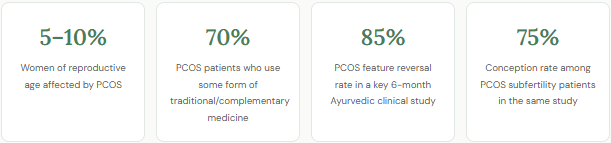
If you’ve been searching for “Can Ayurveda cure PCOS permanently?” you’re not alone. PCOS (Polycystic Ovary Syndrome) affects an estimated 5–10% of women of reproductive age worldwide, making it one of the leading causes of hormonal imbalance, irregular periods, and infertility in India and globally.
The search for a lasting, natural solution has led millions of women toward traditional Ayurvedic medicine, a 5,000-year-old system that promises to address root causes rather than just suppress symptoms.
But does Ayurveda actually work for PCOS? Can it truly provide a permanent cure? This article cuts through the hype with peer-reviewed science, clinical trial data, and practical guidance from experts.
What is PCOS? Understanding the Condition
Polycystic Ovary Syndrome (PCOS) is a complex, multifactorial endocrine disorder characterized by a combination of hormonal imbalance, metabolic dysfunction, and reproductive issues. It is not simply a “cyst on the ovary”, it’s a systemic condition affecting multiple organs.
Common PCOS Symptoms
- Irregular or missed menstrual cycles (oligomenorrhea / amenorrhea)
- Elevated androgen levels → acne, hirsutism (excess facial/body hair), hair thinning
- Insulin resistance and weight gain (especially abdominal)
- Polycystic ovarian morphology on ultrasound
- Difficulty conceiving (subfertility / infertility)
- Mood swings, anxiety, depression
- Long-term risks: Type 2 diabetes, cardiovascular disease, endometrial cancer
Medical Note: PCOS has no universally established "permanent cure" in any system of medicine — Ayurvedic, conventional, or otherwise. Treatment goals focus on symptom management, hormonal regulation, metabolic health, and fertility restoration. Always get a formal diagnosis from a qualified physician.How Ayurveda Understands PCOS
Classical Ayurvedic texts don’t mention PCOS by name; it’s a modern clinical entity. However, Ayurvedic scholars correlate PCOS with several classical conditions that share overlapping symptoms:
- Aartava Kshaya : Deficiency or loss of menstrual flow; delayed, scanty, or absent periods
- Pushpaghni Jataharini: “Destroyer of ovum,” a state where fertility is hindered
- Granthibhuta Artava Dushti : Cyst-like formations in the reproductive tract due to Dosha imbalance
- Nashtartava: Complete cessation of menstruation
The Dosha Framework: Kapha, Vata & Pitta in PCOS
In Ayurveda, PCOS involves the disruption of multiple Doshas:
| Dosha | How It Manifests in PCOS | Primary Tissues (Dhatus) Affected |
|---|---|---|
| Kapha (dominant) | Weight gain, subfertility, hirsutism, cystic ovaries, cold intolerance | Medas (fat tissue), Shukra/Artava (reproductive tissue) |
| Pitta | Acne, hair loss, painful periods, blood clots, emotional volatility | Rakta (blood), Artava (menstrual fluid) |
| Vata | Scanty, irregular, painful menstruation; anxiety; severe hormonal fluctuations | Rasa (plasma), Artava Vaha Srotas |
According to Ayurveda, the pathology involves obstruction in the pelvic cavity (Apana Kshetra) disrupting the normal flow of Vata, which governs all downward-moving physiological functions, including menstruation and reproduction.
Can Ayurveda Cure PCOS Permanently? The Honest Answer
The Verdict
Ayurveda cannot guarantee a permanent cure for PCOS in the absolute sense — no medical system can. However, clinical research shows it can effectively manage, significantly reduce, and in some cases reverse PCOS symptoms, particularly when treatment is personalised, consistent, and paired with diet and lifestyle changes. Early intervention yields the best outcomes.
The question “can Ayurveda cure PCOS permanently” is understandable, but it sets a binary expectation for a condition that is fundamentally chronic and multifactorial. A more useful framework:
- Symptom reversal: Many patients achieve regular cycles, cleared acne, and weight normalisation
- Hormonal normalisation: LH/FSH ratios, testosterone levels, and insulin sensitivity can improve measurably
- Ovarian morphology improvement: Ultrasound studies show a reduction in ovarian cyst size and number
- Long-term remission : Possible with sustained lifestyle adherence, but relapse is common if old habits return
Key Insight: PCOS is a lifestyle-linked condition. Ayurveda’s greatest strength is its integration of herbal medicine, detox therapies, dietary reform, and daily routine (Dinacharya), addressing root causes rather than masking symptoms with hormonal drugs.
Best Ayurvedic Herbs for PCOS (Evidence-Backed)
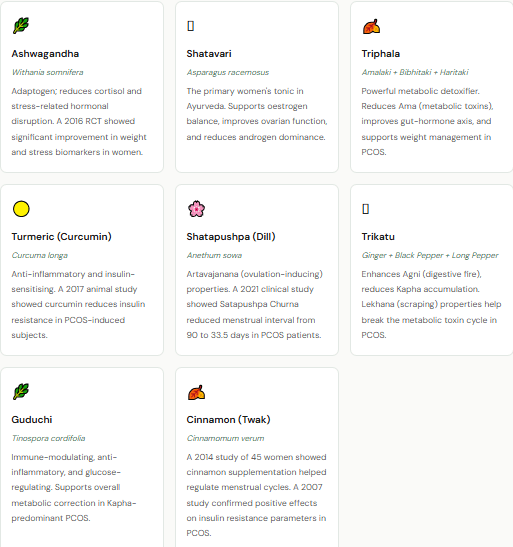
These are the most clinically studied Ayurvedic herbs for managing PCOS. Always consult an Ayurvedic physician for personalised dosage herbs interact differently based on your Prakriti (body type) and dominant Dosha.
Panchakarma Therapy for PCOS
Panchakarma is Ayurveda’s flagship detox and therapeutic system. Research increasingly supports its role in PCOS management, particularly for removing the deep-seated Ama (metabolic waste) that perpetuates hormonal imbalance.
Key Panchakarma Therapies Used for PCOS
| Therapy | Sanskrit Name | Role in PCOS | Research Status |
|---|---|---|---|
| Therapeutic Purgation | Virechana | Removes Pitta and Kapha toxins; restores liver-gut-hormone axis; reduces androgen excess | 🔬 Under active RCT (JRAS 2024, 180 participants vs. Metformin) |
| Medicated Enema | Basti Karma | Most commonly used Panchakarma for PCOS; directly addresses Apana Vata; improves pelvic circulation | 🔬 Most studied intervention per PubMed scoping review (2023) |
| Uterine Enema | Uttara Basti | Direct uterine treatment; improves follicular health, ovulation, and endometrial receptivity | ✅ Positive outcomes in multiple clinical studies |
| Therapeutic Vomiting | Vamana Karma | Reduces Kapha overload; used in obese PCOS patients; followed by herbal supplementation | ✅ 2017 study (15 patients) showed improved fertility outcomes |
| Oil Massage Therapy | Abhyanga + Swedana | Reduces Vata aggravation; improves lymphatic drainage; decreases stress hormones | 📋 Used adjunctively in most PCOS protocols |
Clinical Highlight: A 2024 randomised controlled trial published in the Journal of Research in Ayurvedic Sciences is comparing Virechana (purgation) + Ayush-SSM tablets against Metformin (the standard pharmaceutical) in 180 PCOS patients over 6 months signalling growing institutional interest in Ayurvedic PCOS treatment at par with allopathic standards.
Ayurvedic Diet & Lifestyle for PCOS
Ayurveda views diet and daily routine (Dinacharya & Rutucharya) as medicine. Published research confirms that Ayurvedic dietary advice for PCOS aligns closely with the 2023 International Evidence-Based Guideline for PCOS, which advocates for personalised, culturally sensitive, lifelong lifestyle modifications.
Ayurvedic Dietary Principles for PCOS
- Kapha-pacifying foods: Bitter, astringent, light foods — leafy greens, moong dal, barley, ragi, methi (fenugreek), ridge gourd
- Avoid Kapha-aggravating foods: Dairy excess, refined sugar, refined wheat, fried foods, cold/heavy foods
- Regulate Agni (digestive fire): Warm meals, ginger-spiced food, no cold water, avoid skipping meals or overeating
- Anti-inflammatory emphasis: Turmeric, cumin, coriander, fennel, black pepper in daily cooking
- Blood sugar regulation: Low-glycaemic index grains, fibre-rich meals, cinnamon in morning tea/water
Yoga & Exercise for PCOS in Ayurveda
A 2012 study found that a 12-week yoga programme significantly reduced anxiety in adolescent girls with PCOS. Recommended practices include:
- Asanas: Supta Baddha Konasana, Setu Bandhasana, Malasana, Viparita Karani, Bhujangasana
- Pranayama: Anulom Vilom, Bhramari, Kapalbhati (moderate, not vigorous)
- Daily walk: 30–45 minutes, light-to-moderate pace
- Avoid: Excessive, high-intensity exercise which can further stress adrenals in PCOS
Ayurveda vs. Conventional Medicine for PCOS
| Parameter | Ayurveda | Conventional Medicine |
|---|---|---|
| Treatment approach | Root cause / holistic / personalised by Prakriti | Symptom-based / standardised protocols |
| Speed of results | Gradual (3–6+ months) | Faster symptom relief (weeks) |
| Hormonal regulation | Via herbs and lifestyle; slower but sustainable | OCPs, anti-androgens; faster but symptom returns on stopping |
| Insulin resistance | Triphala, Guduchi, cinnamon, dietary correction | Metformin; well-evidenced, fast-acting |
| Fertility | Uttara Basti, Shatavari; promising data | Clomiphene, letrozole, IVF; higher evidence base |
| Side effects | Low when properly prescribed; herb interactions possible | Documented side effects (nausea, bone density, cardiovascular) |
| Long-term sustainability | High — lifestyle-based changes | Lower — symptoms often return after stopping medication |
| Best use case | Mild-moderate PCOS; long-term management; adjunct therapy | Severe PCOS; immediate symptom control; fertility treatment |
What Does the Clinical Research Say?
Here is a summary of the most significant peer-reviewed studies on Ayurveda for PCOS:
| Study | Method | Sample | Key Finding |
|---|---|---|---|
| Siriwardene et al., 2010 (PMC) | 6-month Ayurvedic regimen (Shodhana + Shamana + Tarpana) | 40 women with PCOS subfertility | 85% PCOS feature reversal; 75% conception rate |
| Bhingardive et al., 2017 | Vamana Karma + Shatapushpadi Ghanavati | 15 PCOS patients | Improved conception outcomes; effective in Artava Kshaya |
| Satapushpa + Tila Tailam, 2021 | Prospective before-after study | 30 women (oligomenorrhea + PCOS) | Menstrual interval reduced from 90 → 33.5 days (p<0.001) |
| Pardhekar et al., 2024 (PMC) | Case study — 2 months Kayachikitsa protocol | 23-year-old with irregular cycles + weight gain | Regular cycles, weight reduction, normal ovarian USG at Day 60 |
| JRAS RCT, 2024 (Ongoing) | Open-label RCT — Virechana + Ayush-SSM vs Metformin | 180 participants, 6 months | Ongoing — results awaited; significant institutional trial |
| Armour et al. Scoping Review, 2023 (PubMed) | Systematic scoping review of Ayurveda + PCOS studies | Multiple clinical studies reviewed | Promising evidence for symptom management; Basti most studied; gaps in safety reporting |
Frequently Asked Questions
Can Ayurveda permanently cure PCOS?
No medical system offers a guaranteed permanent cure for PCOS. However, Ayurvedic treatment can significantly reduce symptoms, regulate hormones, and in clinical studies has reversed PCOS features in 85% of participants. Long-term remission is achievable with sustained lifestyle changes.
How long does Ayurvedic treatment for PCOS take to show results?
Most clinical protocols last 3–6 months. Some patients see improvements in menstrual regularity within 6–8 weeks. The 2010 Siriwardene study showed PCOS feature reversal after a full 6-month protocol. Severity, age at diagnosis, and lifestyle compliance all affect timeline.
Which is the best Ayurvedic herb for PCOS?
Can I take Ayurvedic medicines along with my current PCOS medication?
Often yes, Ayurveda is increasingly used as a complementary therapy alongside Metformin, OCPs, or Clomiphene. However, certain herbs can interact with medications. Always inform both your gynaecologist and Ayurvedic physician about all treatments you are taking.
Is Panchakarma safe for PCOS? Where should I get it done?
Panchakarma is safe when administered by a trained, licensed Ayurvedic physician (BAMS/MD Ayurveda) at a qualified Ayurvedic hospital or clinic. Avoid unregulated “wellness spa” versions. In India, NABH-accredited Ayurvedic hospitals provide the safest settings.
Can Ayurveda help with PCOS-related infertility?
Yes, this is one of the most studied areas. The 2010 Siriwardene et al. study found a 75% conception rate in women with PCOS-related subfertility after a 6-month Ayurvedic regimen. Uttara Basti (uterine enema) is particularly used for improving follicular health and endometrial receptivity.